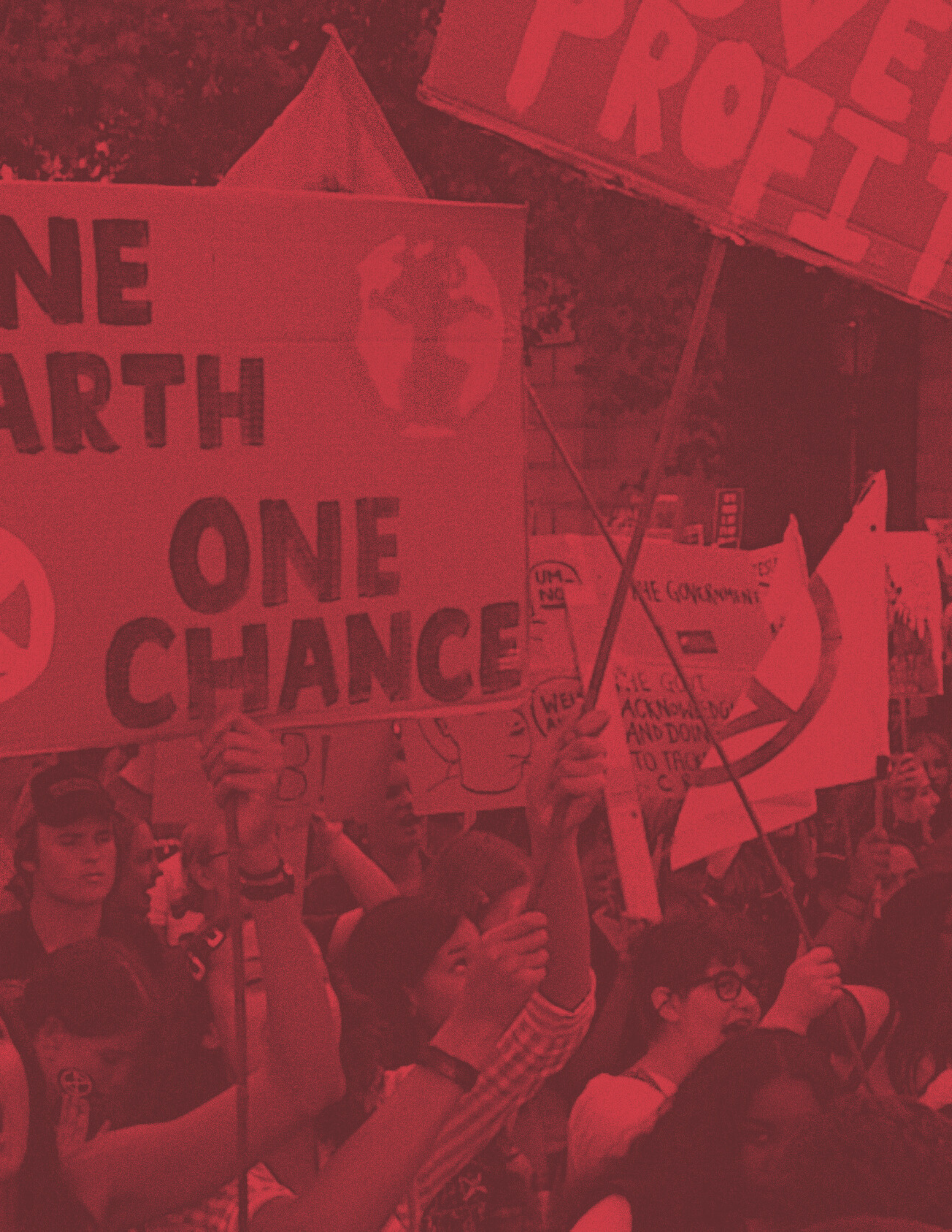
Clear The Air
“Clear The Air” is both the capstone project of my Master’s degree in Advertising and Brand Responsibility as well as the culmination of more than five years of research and experience in campaign strategy. It is a 90-page guidebook I researched, wrote, and designed to provide climate advocates and organizations with strategies used by advertisers and political parties to grab audiences.
This project came together in the Spring of 2025, at a time of massive uncertainty for the climate movement. The moments when climate activists feel the most discouraged are the moments when we need effective climate activism the most. While often dismissed as exploitative or cynical, the fields of politics and advertising each possess strategies in communication and persuasion perfected through high-stakes competition—strategies that can be leveraged for social good too. Climate activists need to tap into these strategies if they want to make a difference.
Chapters
-
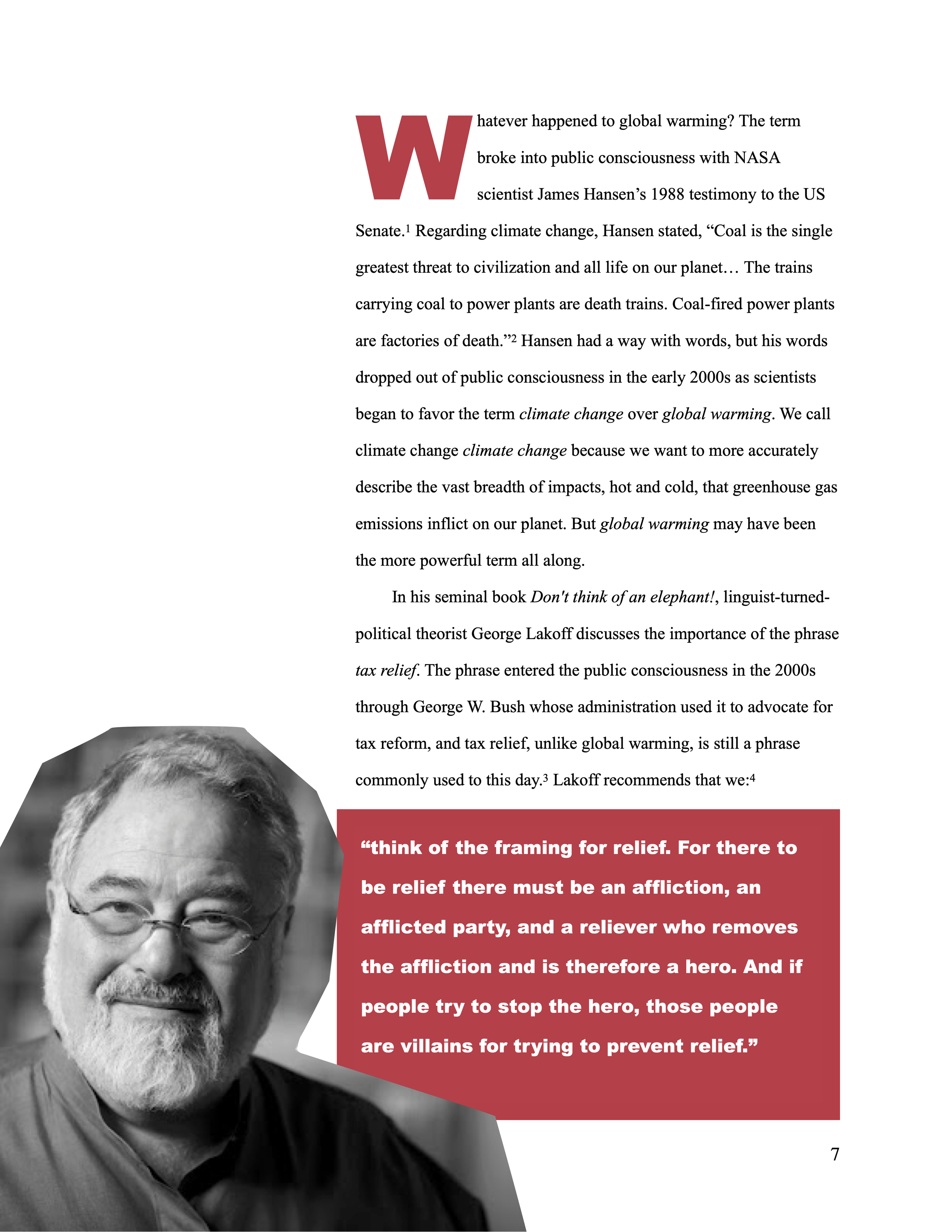
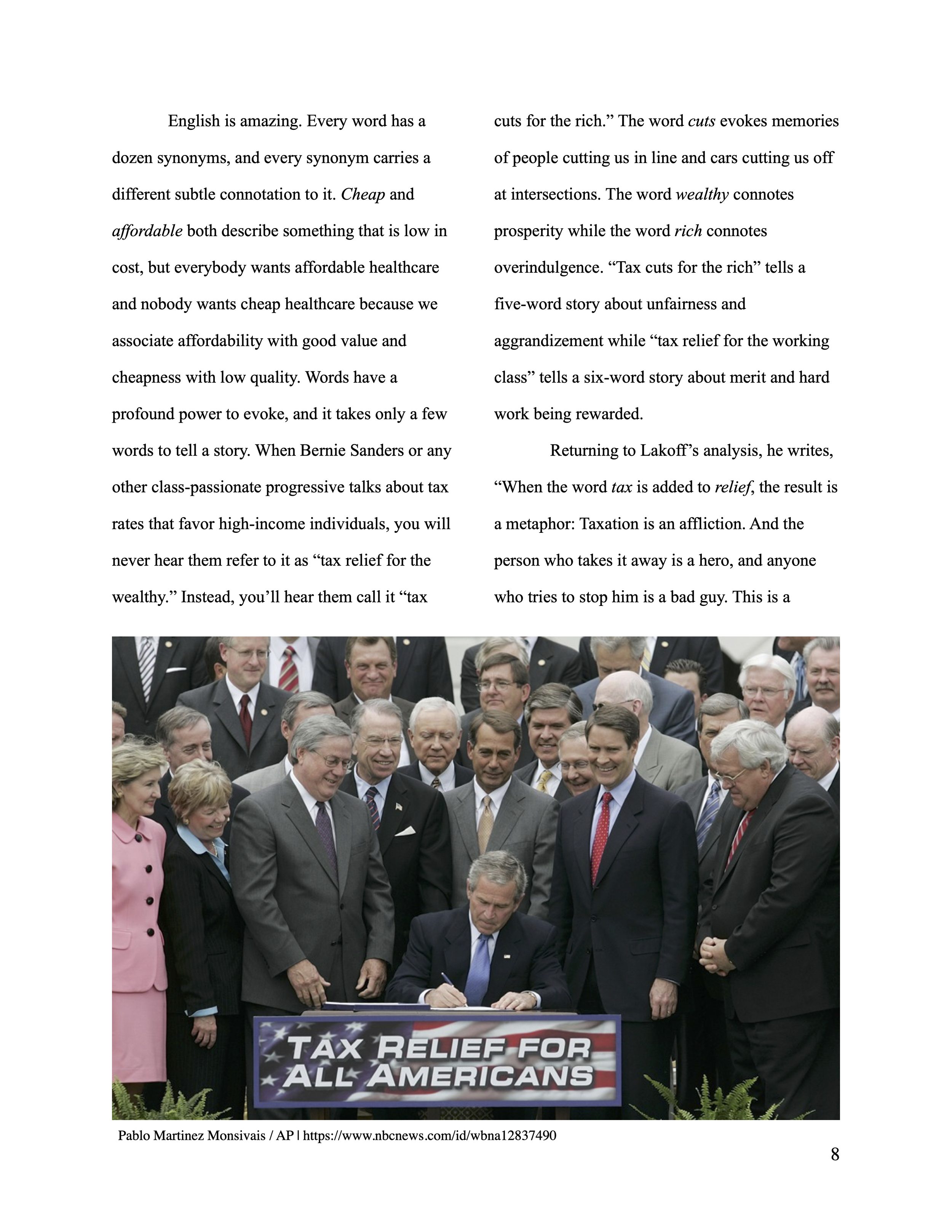
Language carries connotation—global warming evokes danger, while climate change is ambiguous. This principle, drawn from linguist George Lakoff’s work, reveals how successful advertising and political campaigns leverage framing in word choice to influence public perception: tax relief or tax cuts, illegal immigrant or undocumented immigrant, “90% fat-free” or “10% fat.” Climate advocacy lacks a universally resonant tagline and often fails to provide supporters with evocative language.
In this chapter, I argue that framing is imperative for a social movement’s success and discuss how framing can reach audiences across the political spectrum. To show what framing can look like in action, I also propose a non-disruptive protest campaign centered on the the Mendenhall Glacier in Alaska. -
Protest is communication, and in communication, how you’re heard matters as much as what you say. For Just Stop Oil, use of disruptive protest tactics without a clear aim has largely backfired with the public, provoking anger, confusion, and psychological reactance. While such tactics have historical precedent, their symbolism today is often lost or misinterpreted amid viral outrage and context collapse on social media. Climate advocacy needs to ensure that it’s tactics align with its goals.
In this chapter, I argue that activism is advertising. Climate organizations not like brands; they are brands, and every organization, no matter how radical or mainstream in their approach, must keep social responsibility in mind. This is truer today than it ever has been, when efforts in activism are vulnerable to social media’s fleeting focus and capricious nature. Drawing on lessons urged by experienced activists like Anat Shenker-Osorio, I use Just Stop Oil and similar organizations as a case study in balancing attention-grabbing tactics with public relationship building. -
Research in charity marketing shows that overwhelming people with scary statistics and overly pessimistic predictions for the future can lead to the “drop in the bucket” effect. Fear-based messaging works best when there is a clear enemy, a sense of agency, and a vision of victory; climate change messaging too often lacks all of these. Negativity is not only discouraging but also deafening in an era of alarmist clickbait and doom-scrolling. Just as the best campaigns in advertising and politics sell an idealized future, climate advocacy must sell a livable one.
In this concluding chapter, I argue that communicating about the climate crisis requires a careful balancing act of never underplaying its severity while also never portraying it as inevitable, and the trick to convincing people it isn’t inevitable is by believing it ourselves. Optimism is not wishful thinking but a deliberate strategic choice activists must make in the face of adversity to keep themselves in the fight. We’re not just reaching a tipping point in global warming; we’re also reaching a tipping point in global action against it.