
Just Stop Oil
Just Stop Oil’s radical approach to activism and controversial acts of civil resistance succeed in one major way: they garner attention. Each demonstration, whether it’s spraying fake spray paint on Stonehenge or splashing tomato soup on famous works of art, garners significant buzz on social media platforms. However, Just Stop Oil often posts videos of their demonstrations on social media without context for the purpose or goals behind the acts, making them appear like disruption for disruption’s stake. As a result, the attention they garner often turns into reactionary backlash rather than support.
I set out to rethink Just Stop Oil’s approach to social media by addressing two major audience obstacles: reactance—when people who might support a cause push back because the messaging feels coercive—and confusion about the motives behind disruptive protests. Many viewers tune out climate activism when they feel blamed for a crisis they can’t individually solve.
These speculative mock social posts offer a clearer alternative: pairing controversial protest footage with short, persuasive explanations that bridge the gap between Just Stop Oil’s goals and public sentiment.
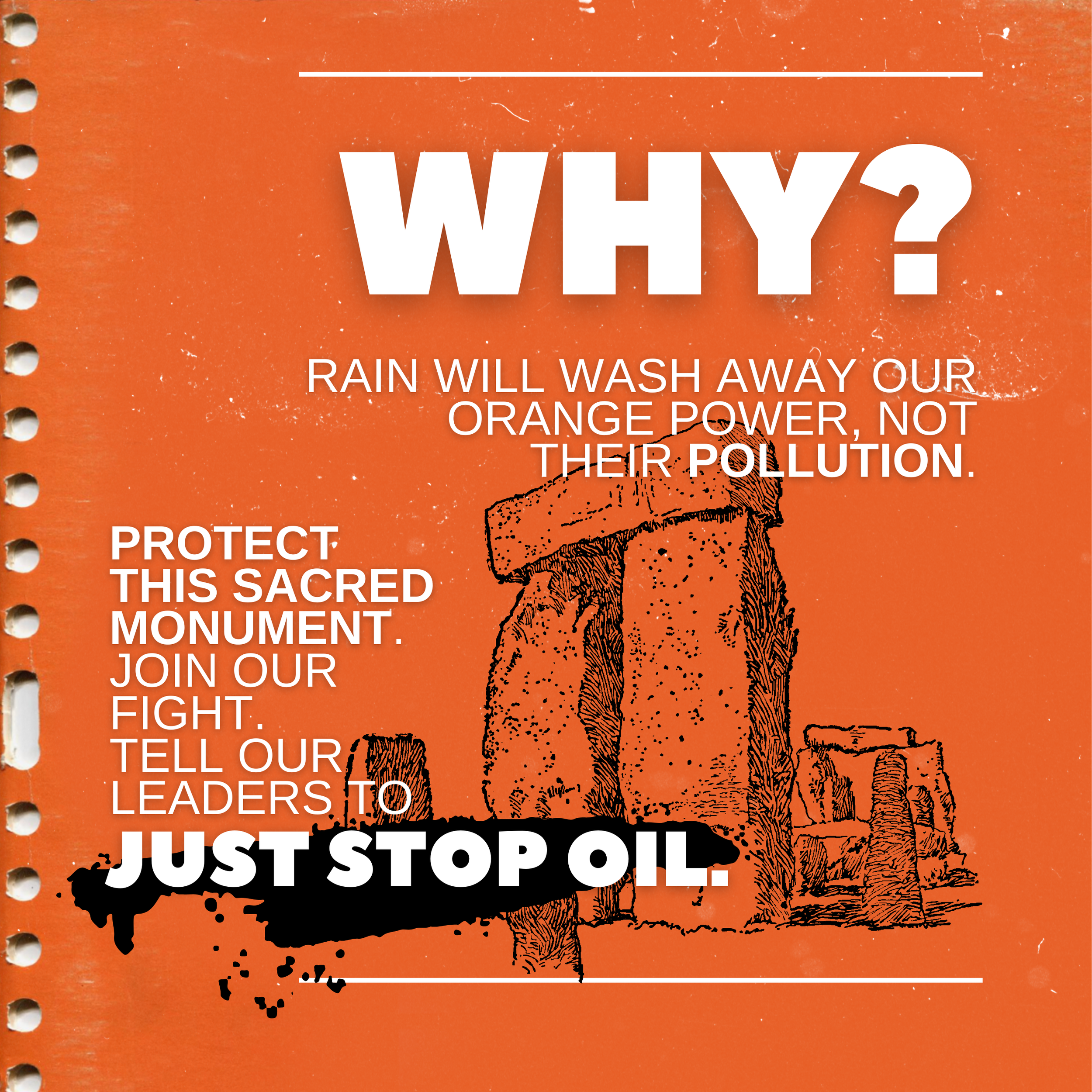
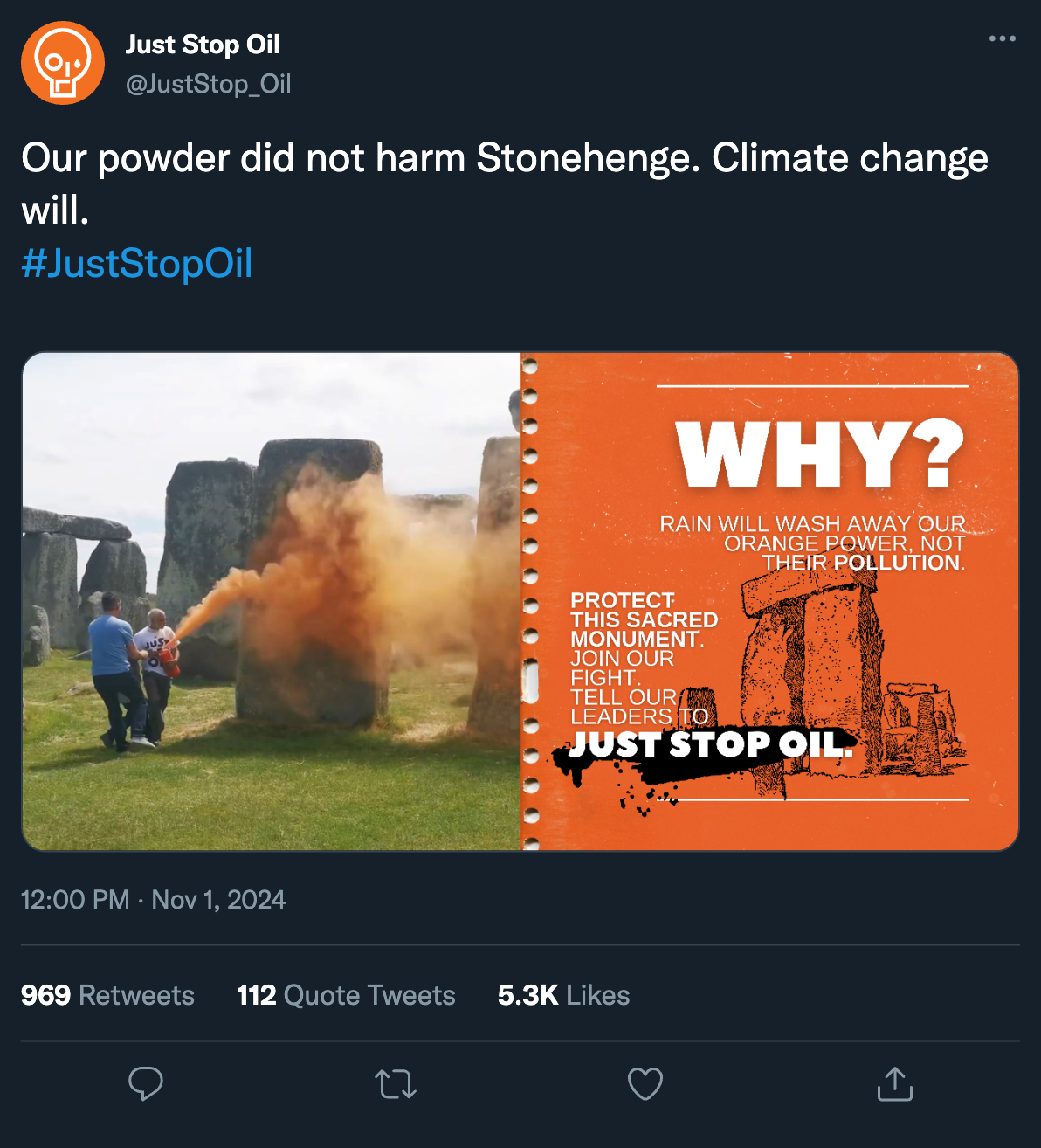
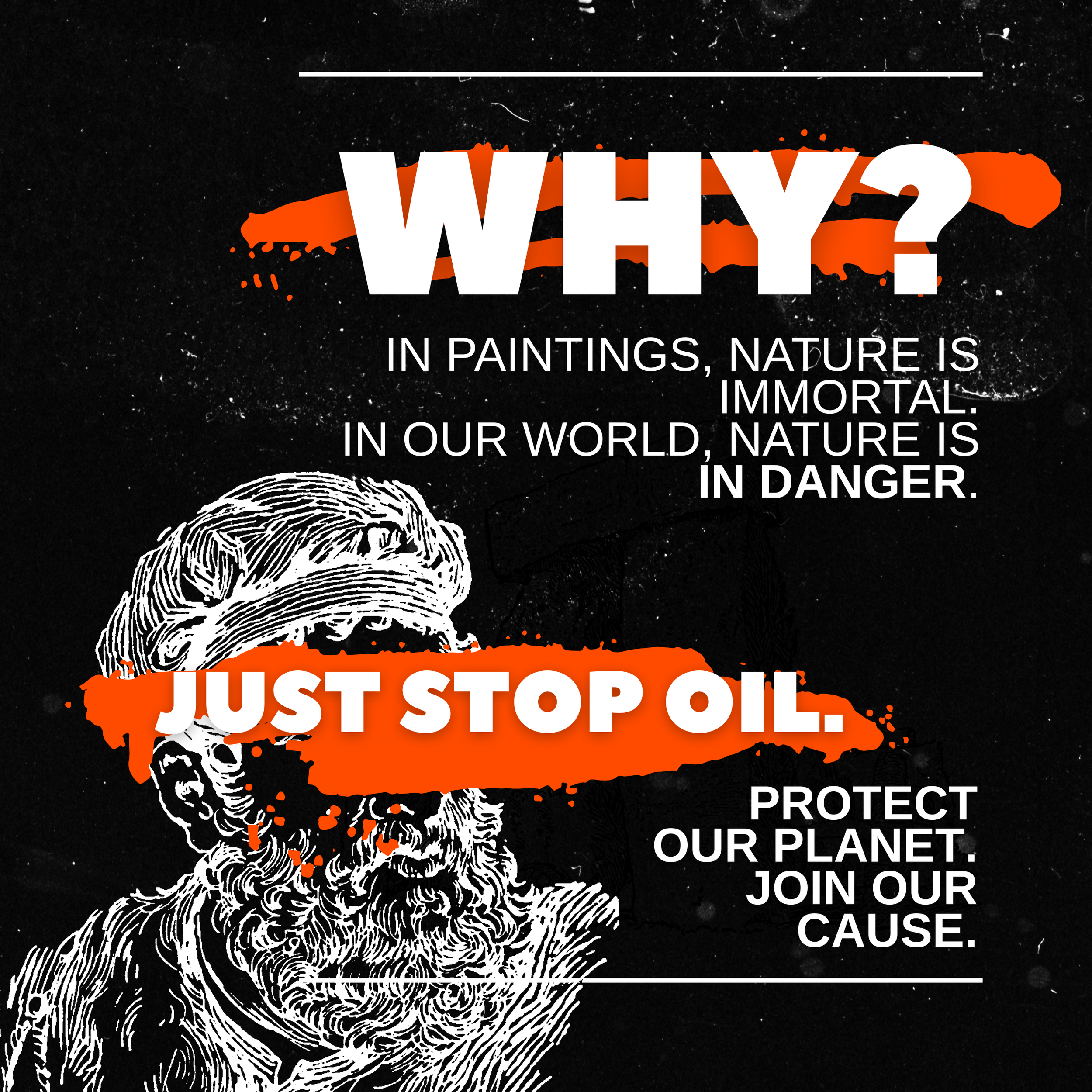
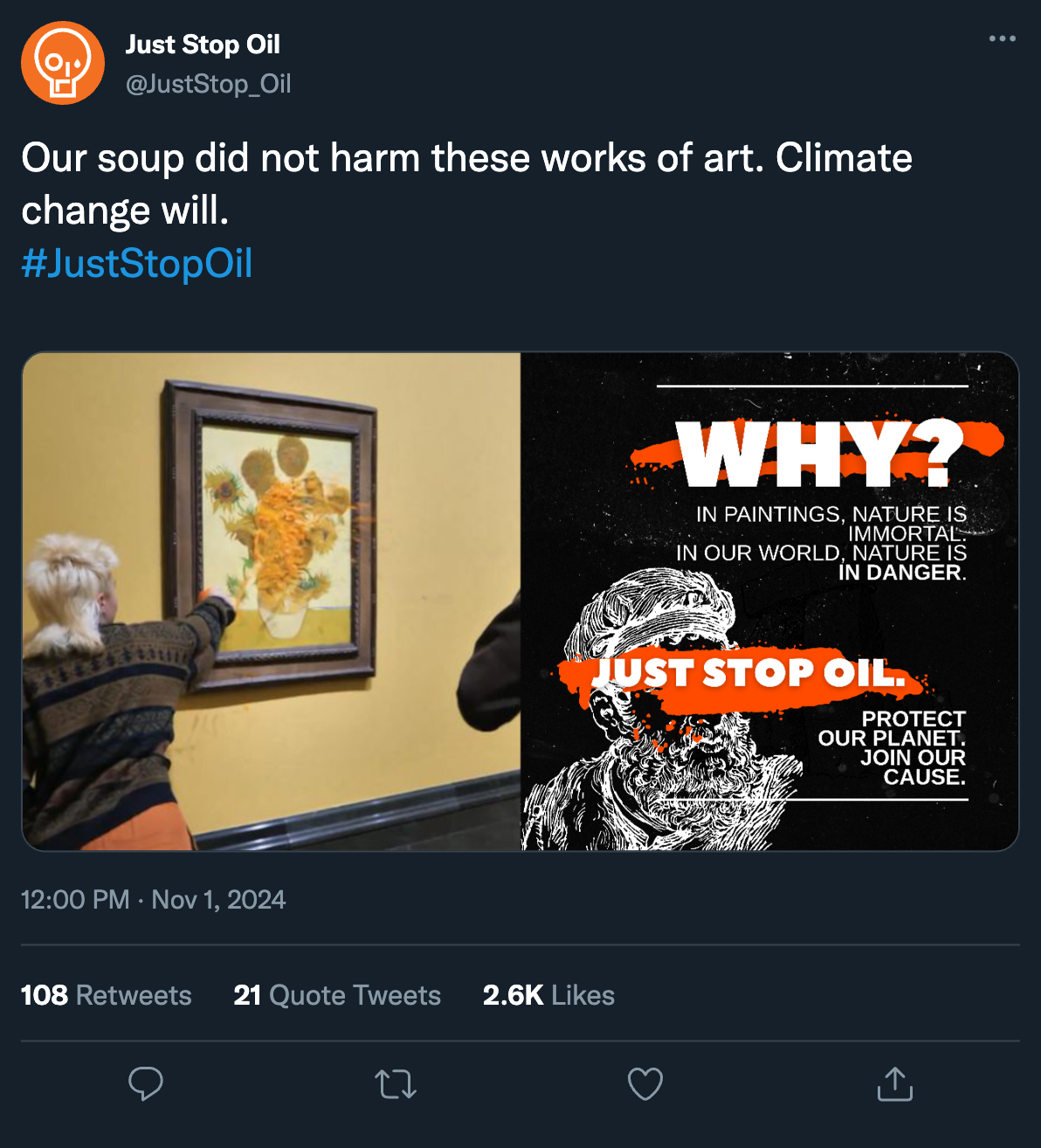
If the anticipated audience reaction to seeing Stop Stop Oil’s demonstrations will be anger and confusion, Just Stop Oil could utilize this confusion to its advantage by providing easily accessible context for users who want to know why the organization did what it did. By placing the context directly beside the images of the demonstrations, viewers’ attention will be naturally guided directly to it before they take to the comments to express their outrage. In these proposed concepts, the word “why” is prominently displayed in large, bold text, anticipating the primary question viewers are likely to have after witnessing the demonstrations.
The rest of the messaging first emphasizes that no permanent damage was caused to the targeted historic relics, then draws a clear connection between the demonstrations and the climate crisis. Highlighting the lack of permanent damage helps mitigate potential backlash, while linking the demonstrations to the threat of climate change effectively conveys their purpose, reducing confusion and backlash.
Finally, my concepts conclude with an invitation to join the movement: statements like “Join our fight. Tell our leaders to Just Stop Oil” and “Protect our planet. Join our cause.” These reduce the degree of reactance that viewers experience by emphasizing that participation in the cause is a voluntary invitation, not an imposition. Now, instead of questioning why a group of protesters vandalized a beloved landmark and heritage site, viewers will be left questioning if they themselves can be part of the solution.